
Services
We’re offering the best
services to you
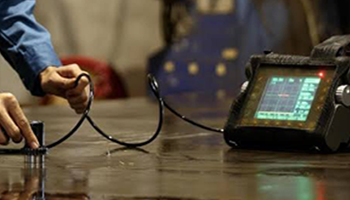
Ultrasonic Test
In ultrasonic testing, very short ultrasonic pulse-waves with center frequencies ranging from 0. 1-15 MHz and occasionally up to 50 MHz are launched into materials to detect internal flaws or to characterize materials.
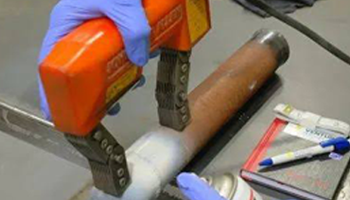
Magnetic Particle Test
The Magnetic Particle Inspection method of Non-Destructive testing is a method for locating surface and sub-surface discontinuities in ferromagnetic material.
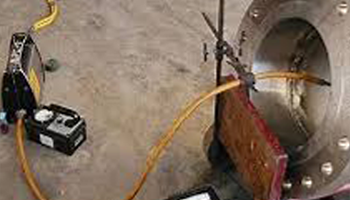
Radiographic Test
Radiography uses and x-ray device or radioactive isotope as a source of radiation which passes through the material and is captured on film or digital device.

Penetrant Inspection
Liquid In Liquid Pentrant the test object or material is coated with a visible or fluorescent dye solution. The excess dye is removed from the surface and a developer which acts like a blotter is applied drawing penetrant out of imperfections open to the surface. With visible dyes, the vivid color contrast between the penetrant and the developer is used. With fluorescent dyes an ultraviolet lamp is used to make the ‘bleed out’ fluorescence brightly allowing the imperfection to be seen readily.
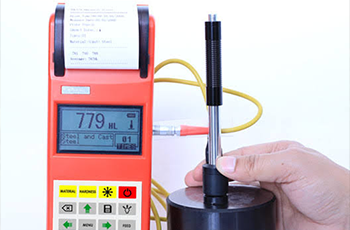
Ultrasonic Thickness Measurement
Detection of metal loss caused by corrosion, erosion or damage is vital to ensure the continued safety and operation of the inspected item/structure.
An ultrasonic thickness gauge works by precisely measuring how long it takes for a sound pulse that has been generated by a small probe called an ultrasonic transducer to travel through a test piece and reflect back from the inside surface or far wall. From this measurement, the thickness of the test piece is calculated and displayed on a digital sc.